Notes from building IX.
How private assets get tokenized, marked, borrowed against and financed — written as we work it out, including the parts that are not solved yet.
 Thesis
Everyone Wants a Piece of AI. Few Are Looking at the Layer Beneath It.
AI exposure does not have to mean picking an AI company. Explore how productive GPU infrastructure creates a different thesis built around compute demand, operating economics and fractional ownership.
 Explainer
What Does Fractional Ownership Actually Mean?
Fractional ownership is more than dividing an asset into smaller pieces. Learn how legal ownership, economic rights, revenue rights and token representation differ.
 Thesis
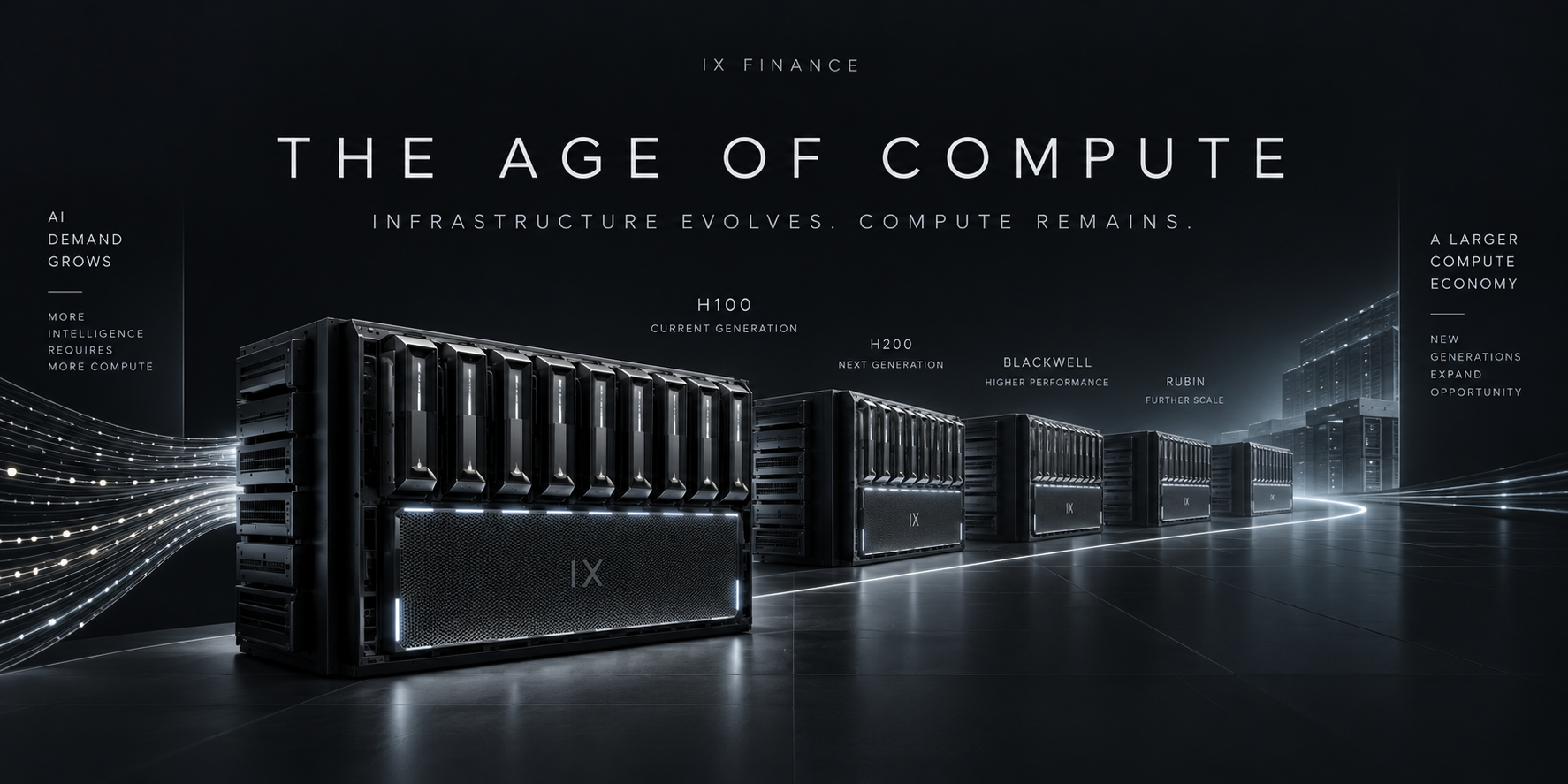
The Age of Compute: Why GPU Infrastructure Is Becoming a Strategic Asset
AI growth depends on physical compute. Explore why GPU fleets, data-center demand and reinvestment are turning productive compute infrastructure into a strategic asset.
 Guide
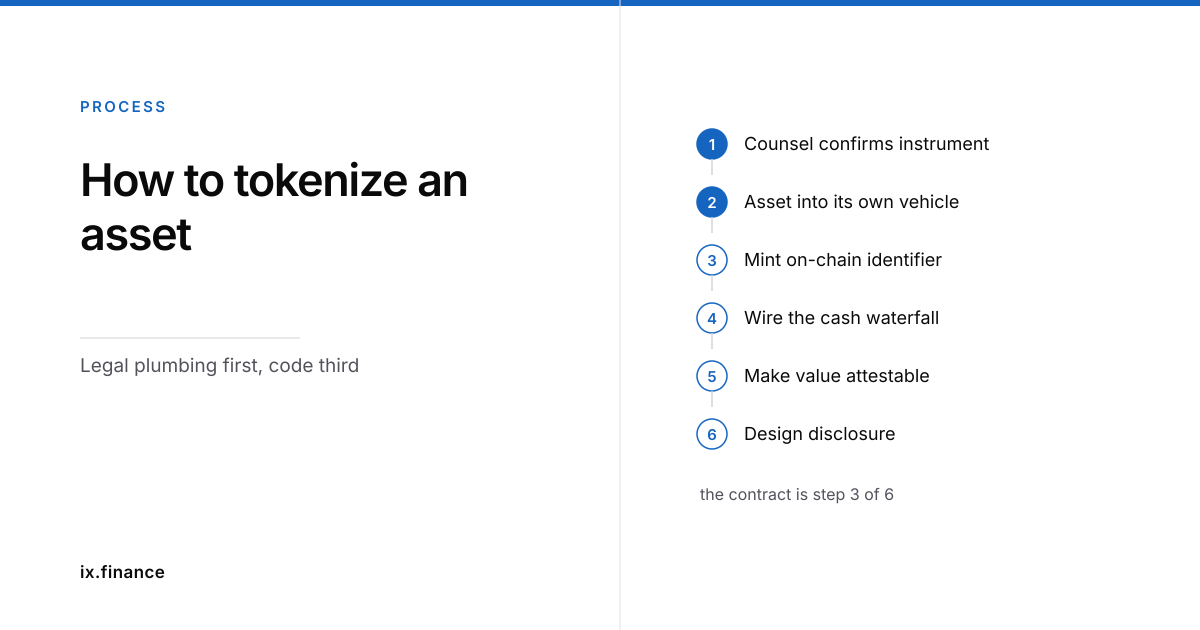
GuideHow to Tokenize an Asset: The Six Steps Nobody Skips
Tokenization is 10% smart contract and 90% legal plumbing. The six steps between a real asset and a claim someone can verify, in the order they must happen.
 Explainer
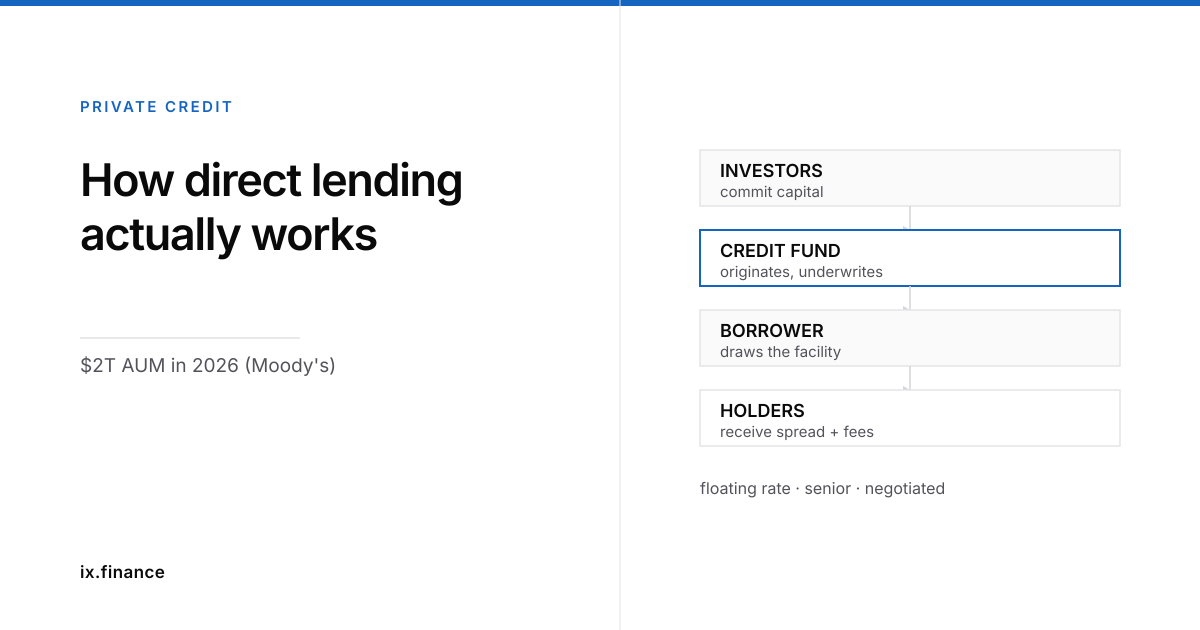
Private Credit, Explained: How Direct Lending Actually Works
Private credit AUM passes $2 trillion in 2026. Here is how a direct loan is originated, priced and recovered — and the three risks regulators keep naming.
 Explainer
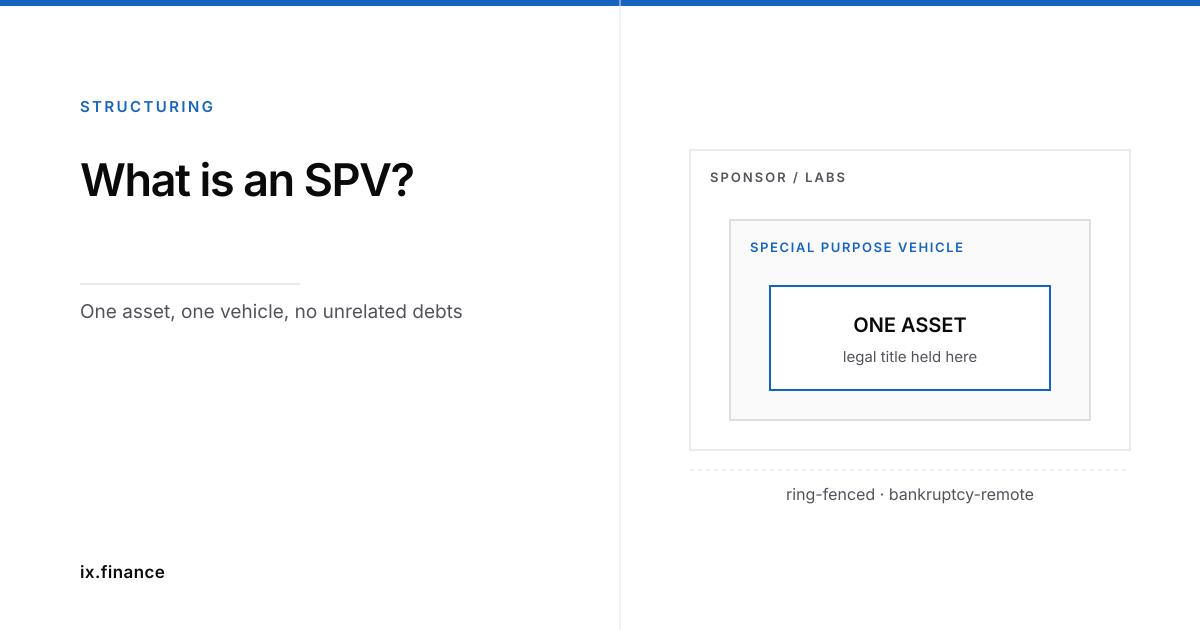
What Is an SPV? Special Purpose Vehicles in Plain English
A special purpose vehicle holds one asset and nothing else. Here is why almost every private deal uses one, what bankruptcy-remote means, and how SPVs fail.
 Thesis
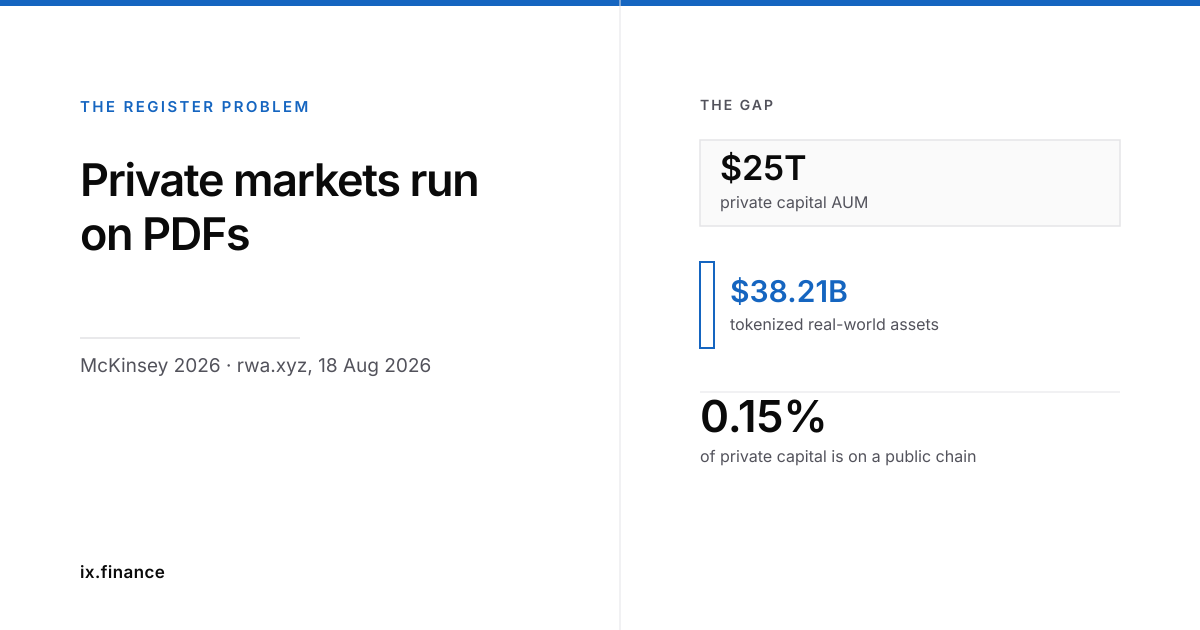
Private Markets Run on PDFs: The Ownership Record Problem
Private capital manages close to $25 trillion. Just $38 billion of real-world assets sit on a public chain. The gap is not technology — it is the register.
What Makes an Asset Worth Tokenizing?
What makes a real-world asset worth tokenizing? Explore the role of ownership, verification, access, settlement, and productive cash flow in RWA tokenization.
Who Actually Pays GPU Yield?
Where does GPU yield actually come from? Follow the money from AI compute demand and GPU rental revenue to costs, settlement, and on-chain ownership.
Tokenized GPU Ownership: The Next Trillion-Dollar Asset Class
Physical GPUs are becoming income-generating assets on-chain. Here's why tokenized GPU ownership is the most overlooked crypto investment opportunity.
The 2026 AI Compute Shortage: Why GPU Supply Can't Keep Up
AI demand is compounding while GPU and data-center supply is capped by fabs, power and build times. Here's why the compute shortage persists into 2026 — and why that makes AI infrastructure a scarce, income-producing asset.
How to Invest in AI Infrastructure: A Guide to Tokenized GPU Compute
AI runs on physical GPUs, clusters and data centers — but owning that infrastructure has always needed institutional capital. Here's how tokenized compute lets anyone invest in AI infrastructure and earn from real workloads.
Tokenized GPUs vs. Tokenized Treasuries: Two Kinds of RWA Yield
Tokenized treasuries and tokenized GPU compute are both real-world assets, but they pay very different yields for very different reasons. Here's how they compare on source, upside, and risk — and where each fits in a portfolio.
What Are Real-World Assets (RWAs)? A Plain-English Guide
Real-world assets (RWAs) are physical or traditional financial assets — property, infrastructure, credit — represented on-chain as tokens. Here's how tokenized ownership actually works, and why it matters.
Why AI Infrastructure Is the First Real-World Asset on IX
AI compute is the most supply-constrained asset of the decade: demand is exploding, supply is not. Here's why IX tokenizes GPU infrastructure first — and what it means for owners.
How On-Chain Ownership of GPU Compute Actually Works
From a physical GPU cluster to a fractional token that pays you when it runs AI workloads — a step-by-step look at how IX turns real compute into on-chain, income-producing ownership.
Product updates and asset drops, straight from the team.